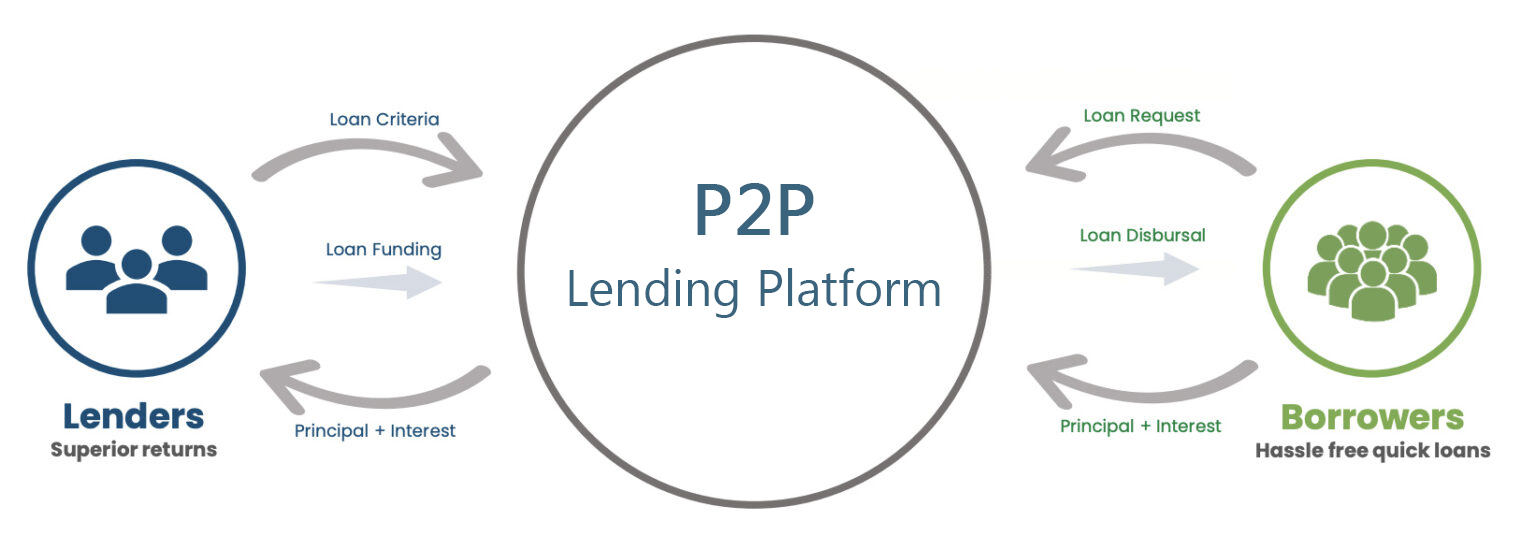
P2P lending is done through a platform that connects borrowers and lenders directly. Those who want to lend money, open an account with a P2P platform as a lender. And those who require a loan register themselves as a borrower.
These platforms then evaluate borrowers on various aspects. They don’t limit their evaluation to just credit scores. They perform their checks, including the borrower’s employment, income, credit history, etc. Not just that, using technology extensively, these platforms also capture borrowers’ habits through social media activities, app usage, etc.
Based on this assessment, the creditworthiness of borrowers is decided, and they are assigned to different risk buckets. It serves as the basis for how much interest rate a borrower needs to pay. The better the creditworthiness of a borrower, the lower the interest rate for him. And the poorer the creditworthiness, the higher the interest rate a borrower has to pay.
Lenders can check this assessment done by the platform for various borrowers and pick whom they want to lend their money as per the risk they want to take and the return they want to earn. Similarly, borrowers can also see the profile of lenders and reach out to them.
The P2P platforms do not keep a margin from the monthly installments or transactions between the lender and the borrower. Instead, they charge a fee from both for the services that they provide.